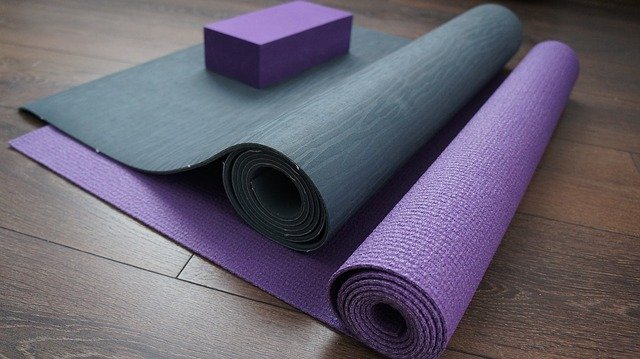
Best yoga mat in 2026: 3 picks for every practice
The right yoga mat depends heavily on what you actually do with it — a mat great for hot yoga can feel wrong for restorative practice, and a mat that’s perfect at home can be a pain to travel with. Here are three solid options depending on what matters most to you.
1. Manduka PRO — best overall
The Manduka PRO has earned its reputation as the standard premium mat over two decades, and it’s backed by a genuine lifetime guarantee. At 6mm thick with dense, closed-cell construction, it offers real cushioning for knees and joints during long holds without feeling unstable during standing poses. The no-slip dot pattern on the underside keeps it firmly planted on the floor. The tradeoff is weight — at roughly 7.5 lbs, it’s not the mat you want to carry to a studio class regularly, but for home practice it’s about as close to a buy-it-once purchase as yoga gear gets.
Who it’s for: Regular practitioners who want a mat that will genuinely last years, and who mostly practice at home or drive rather than walk to class.
2. Gaiam Premium 6mm — best value
Gaiam’s Premium mat delivers real cushioning and grip at a fraction of the premium-brand price, which is why it consistently shows up as the budget-friendly recommendation across independent reviews. It won’t match the Manduka PRO’s longevity or the density of its cushioning over years of heavy use, but for anyone starting a practice or not ready to invest in a $100+ mat, it’s a genuinely solid choice rather than a compromise.
Who it’s for: Beginners, occasional practitioners, or anyone who wants a reliable mat without the premium price tag.
3. Manduka PROlite — best for travel
The PROlite takes the same build quality and lifetime guarantee as the full PRO mat and trims the weight down significantly, at 4.7mm thick and noticeably lighter to carry. It’s the mat to reach for if you regularly walk or bike to a studio, or travel with your practice.
Who it’s for: Anyone who needs to carry their mat regularly and wants Manduka’s durability without the PRO’s bulk.
How to choose
Thickness is the main tradeoff to weigh: thicker mats (6mm) cushion joints better but reduce stability in balancing poses, while thinner mats (3-4mm) offer more ground connection at the cost of comfort during long floor holds. If you do hot yoga specifically, prioritize a mat with strong wet-grip performance, since dry-grip texture alone won’t hold up once you’re sweating.
Pair your practice with a great water bottle — see our comparison of the best insulated water bottles of 2026.
Curious about tracking your recovery and sleep between sessions? See our guide to the best smart ring of 2026.
As an Amazon Associate we earn from qualifying purchases. Prices and availability are accurate as of publish time and may change.